
AutomotivePrecision MachineryAutomotive Turbocharger Component Manufacturer

Case Study

Eliminating Micro-Cracks in Turbocharger Wastegate Shaft Wire Through Process Refinement

Deep peeling and heat-treatment optimization eliminated cold-heading micro-cracks in a turbocharger wastegate shaft component.

Project Profile

Overview

Client Type
Automotive Turbocharger Component Manufacturer
Application
Cold-headed shaft component used in turbocharger wastegate assemblies for automotive engines.

Measured Impact

Results Snapshot

Trial Sample Lead Time
7 days

First trial wire samples using the refined process were delivered within one week.

Validation Batches
3 batches

Three batches were tested under demanding validation conditions before process lock-in.

Major Safety Incidents
0

The optimized supply and quality control process supported a long-term record with no major safety quality incident reported in the cooperation.

Customer Challenge

Customer Challenge

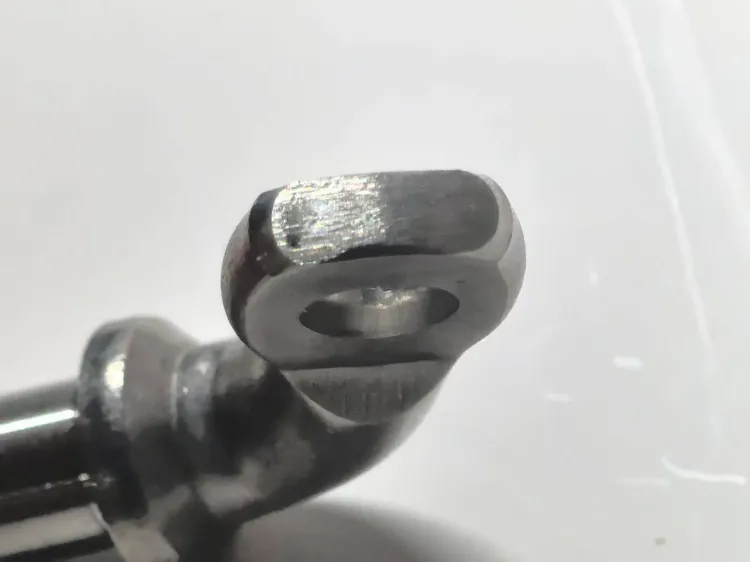
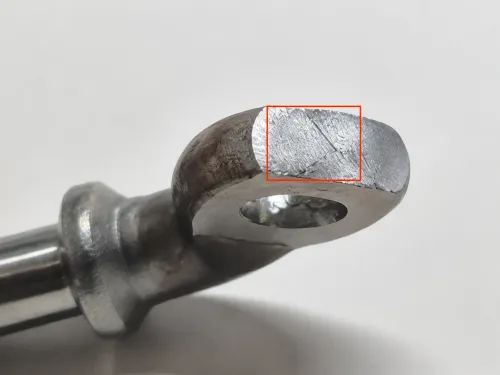
The customer produced a critical bent shaft for turbocharger wastegate assemblies. During cold heading, tiny cracks repeatedly appeared on the component. These cracks were difficult to detect visually, but they created a serious safety risk because the shaft operates inside a high-temperature, high-load engine environment.
Technical Analysis

Risk Analysis

Together with the customer engineering team, we treated the issue as a system-level reliability risk rather than a simple processing defect. Two likely risk paths were evaluated: insufficient resistance to fatigue under cyclic stress, and surface scale or sub-surface defects being carried into the material during forming, creating internal stress concentration points that could reduce load-bearing capacity and service life.

Material Solution

Process Refinement Solution

Because the specified material grade could not be changed, the solution focused on process control. We introduced a deep peeling refinement step to remove surface scale and possible sub-surface defects from the wire. In parallel, we coordinated heat-treatment optimization with upstream partners to refine grain structure, improve uniform deformation behavior and increase resistance to crack initiation and propagation.

Validation

Validation & Response

The first trial wire samples were supplied within seven days after confirming the approach. We then supported trial production and destructive testing with the customer. A three-batch validation program was used to verify that the crack problem had been eliminated and that the safety margin of the component had been improved before moving into stable supply.

Results

Results & Long-Term Value

The refined process removed the hidden crack failure mode and improved the reliability of the shaft component. The successful process parameters were locked into production standards to keep material performance consistent and traceable over long-term supply. The cooperation developed from urgent problem solving into a long-term technical partnership with flexible ramp-up support and stable quality communication.

Key Insight

Case Insight

For safety-critical automotive components, technical responsibility begins with connecting a microscopic defect to its possible macroscopic risk. The value of the material partner is not only to deliver wire, but to build a repeatable, verifiable and maintainable quality assurance process around the customer’s product risk.

Project Gallery

Images

Turbocharger wastegate shaft wire showing cold-heading micro-cracks on 304 stainless steel surface
Before: Cold-heading micro-cracks found on the wastegate shaft wire surface
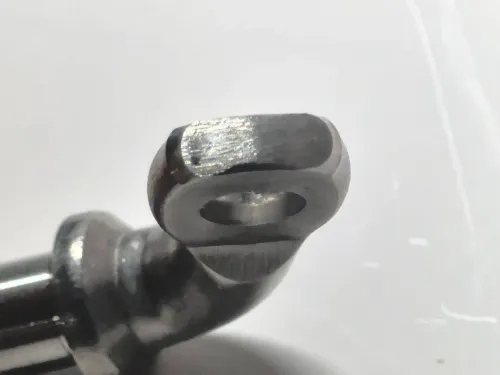
Turbocharger wastegate shaft wire with a crack-free surface after deep peeling and heat-treatment optimization
After: Crack-free surface achieved through deep peeling and heat-treatment optimization