
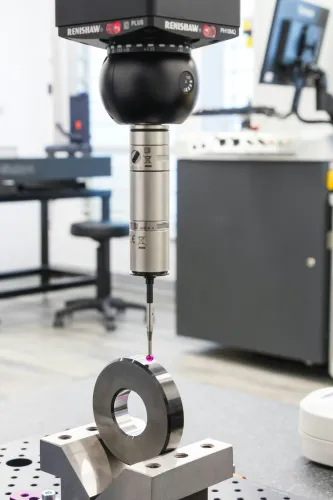
Industry Application
Precision Machinery
High-performance stainless steel designed to meet the exacting standards of precision machinery applications. Durable, reliable, and engineered for meticulous performance.

Problem to Material Route
Dimensional variation and surface defects in raw stock do not affect just one part — they propagate through a machining batch and show up as scrap, rework and shortened tool life across the run.
304 is commonly used for general-purpose machined components where moderate corrosion resistance and machinability are the primary criteria. 316L is often specified where process fluids or cleaning cycles are involved. 17-4PH in the aged condition is considered for high-strength precision parts where hardness uniformity is critical to dimensional predictability after machining. 431 may be evaluated where a grade with better corrosion resistance than standard martensitic types is required for shafts and spindles. Tight diameter tolerance, surface condition and hardness certification on raw bar stock reduce setup variation across batches.
Operating Risk
Hardness variation across a bar causing inconsistent tool wear and dimensional drift, surface inclusions triggering finish defects on precision-machined surfaces, batch-to-batch property variation requiring repeat first-article qualification
Operating Context
Industry Overview
In the world of precision machinery, every component must perform flawlessly under demanding conditions. Our stainless steel provides exceptional strength, corrosion resistance, and stability, ensuring machinery operates with maximum accuracy and longevity. From micro-assemblies to high-tolerance mechanical systems, our stainless steel is engineered to support intricate designs, reduce wear, and maintain peak performance in critical applications.
Applications
Typical Equipment
Material Selection
Recommended Materials
Product Forms
Related Product Forms
Product forms linked through the recommended materials for this industry.